


Feedback that Lands: Adjusting Your Approach with Different Personalities
- Kristen Ann

- May 7, 2025
- 3 min read
Updated: Jun 20, 2025
Giving Feedback Across DISC Colors (Inspired by 'Surrounded by Idiots')
Giving feedback is one of the most important leadership and relationship skills — and one of the trickiest. If you've ever felt like you said the “right thing” but it landed the wrong way, you're not alone.
It’s not just what we say — it's how we say it, and who we say it to.
In my coaching work, I've seen firsthand that understanding communication styles — like the four personalities described in Surrounded by Idiots (Blue, Red, Yellow, and Green) — can transform feedback from conflict into connection.
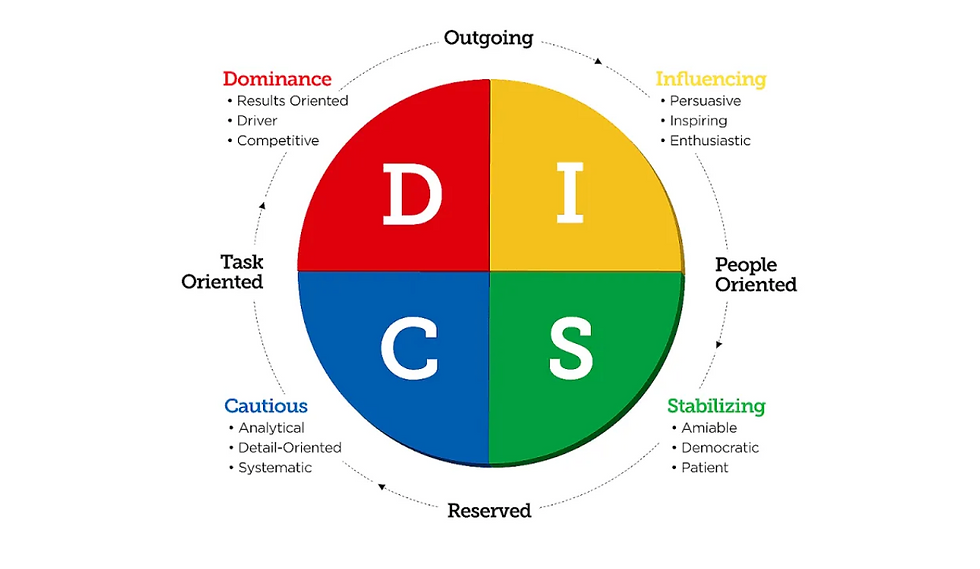
I once worked with a leader who felt frustrated that their "direct and efficient" feedback style (more of a Red) wasn't inspiring improvement — it was shutting down their team. By shifting their approach based on each team member’s core personality style, they didn’t just improve performance — they deepened trust and loyalty.
Here's how to give feedback that builds trust, invites growth, and honors the person you're speaking with:
BLUE (Precise, Analytical, Cautious)
Feedback Approach:
Lead with facts and data, not feelings.
Affirm their competence and attention to detail.
Frame feedback as a problem-solving opportunity, not a personal flaw.
Allow time for reflection before expecting a response.
Phrases to Use:
"I noticed..."
"Would you agree that..."
"What’s your take on this?"
"I'd appreciate your perspective on how we can improve this."
Phrases to Avoid:
"I feel like you..."
"You always/never..."
"This shouldn't be a big deal."
RED (Assertive, Results-Oriented, Direct)
Feedback Approach:
Be direct, brief, and action-focused.
Focus on outcomes and efficiency.
Avoid emotional appeals; stay logical and forward-looking.
Phrases to Use:
"Here’s what needs to happen."
"To get to [goal], let’s consider adjusting this."
"This shift will help us hit the target faster."
Phrases to Avoid:
Long explanations.
Emotional storytelling.
Indirect hints or passive language.
YELLOW (Enthusiastic, Optimistic, Social)
Feedback Approach:
Start with positive reinforcement.
Frame feedback as an opportunity for growth or creativity.
Keep tone upbeat and encouraging.
Tie feedback to future possibilities, not current shortcomings.
Phrases to Use:
"I love your energy on this project! One thing that could make it even better is..."
"You have a gift for [strength]; here's how we can sharpen it even more."
"Imagine how awesome this could be with a small tweak."
Phrases to Avoid:
Overly serious or critical tones.
Critiques without hope or inspiration.
Shaming or isolating language.
GREEN (Stable, Supportive, Harmonious)
Feedback Approach:
Be gentle, relational, and affirming.
Emphasize trust and partnership.
Give time to process emotionally.
Reinforce relationship safety before and after feedback.
Phrases to Use:
"I really value working with you, and I wanted to share something that might help us grow even stronger."
"When you’re ready, I'd love to brainstorm together on this."
"This isn’t a criticism—it’s just something small I’ve noticed that we can work on together."
Phrases to Avoid:
Abrupt confrontation.
Aggressive or urgent tones.
Public correction (always private with Greens).
Style | Focus | Key to Success |
BLUE | Logic, precision | Facts first, preserve competence |
RED | Goals, results | Direct action steps, stay efficient |
YELLOW | Energy, future vision | Uplifting tone, growth framed |
GREEN | Harmony, relationships | Gentle, safe, relational tone |
Feedback isn't one-size-fits-all.It's an opportunity to build bridges, not walls.
Next time you prepare to offer feedback, pause and ask yourself:
What does this person value most — facts, results, connection, or possibility?
How can I meet them there with respect and curiosity?
Great feedback grows not just individuals — but relationships, teams, and trust.
If you’d like support growing your communication and leadership skills, I’d love to connect -- feel free to schedule a free consultation today.
I want to hear your story!



Comments